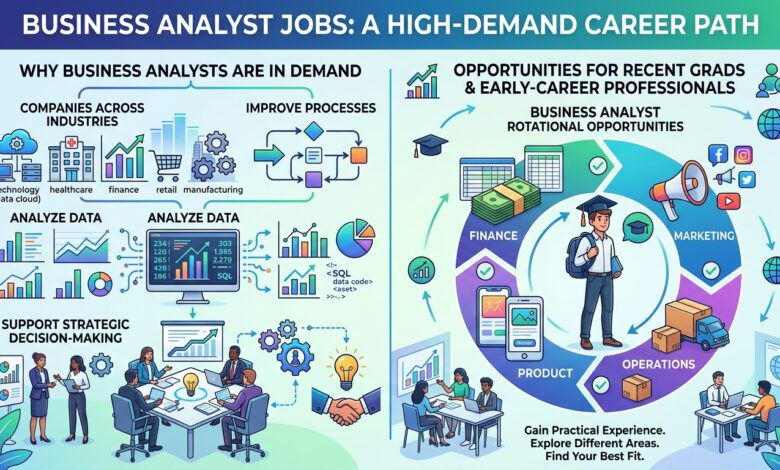
Business analyst jobs are among the most in-demand roles in today’s job market. Companies across industries rely on business analysts to improve processes, analyze data, and support strategic decision-making. For recent graduates and early-career professionals, business analyst rotational opportunities provide an excellent way to gain practical experience while exploring different areas of a business.
This article explains what rotational business analyst programs are, their benefits, required skills, and how you can prepare for a successful career.
What Are Business Analyst Rotational Opportunities?
Business analyst rotational opportunities are structured training programs offered by companies to help new employees gain experience across multiple departments. Instead of working in one team from the beginning, participants rotate through different business functions over a set period.
Common rotation areas include:
- Finance
- Marketing
- Operations
- Information Technology (IT)
- Human Resources
- Supply Chain
- Product Management
- Customer Experience
These programs typically last between 12 and 24 months, with each rotation lasting three to six months.
Why Companies Offer Rotational Programs
Organizations use rotational programs to develop future leaders and identify employees with strong analytical and leadership potential.
Benefits for employers include:
- Building versatile professionals
- Improving cross-department collaboration
- Developing leadership pipelines
- Retaining talented employees
- Encouraging innovation and problem-solving
For employees, these programs provide valuable exposure to different business functions and career paths.
Key Responsibilities of a Rotational Business Analyst
While responsibilities vary by department, participants often perform tasks such as:
- Collecting and analyzing business data
- Identifying process improvements
- Creating reports and dashboards
- Supporting project management teams
- Gathering business requirements
- Working with stakeholders
- Preparing presentations for management
- Monitoring business performance metrics
Each rotation helps participants develop new technical and communication skills.
Skills Needed for Business Analyst Jobs
Successful business analysts combine analytical thinking with strong interpersonal skills.
Important skills include:
Analytical Thinking
Business analysts interpret complex data and identify patterns that support better business decisions.
Communication
Clear communication is essential when explaining findings to managers, clients, and technical teams.
Problem-Solving
Companies value analysts who can identify challenges and recommend practical solutions.
Data Analysis
Knowledge of data analysis tools helps analysts uncover trends and measure business performance.
Technical Skills
Many employers look for experience with:
- Microsoft Excel
- SQL
- Power BI
- Tableau
- Microsoft PowerPoint
- Business Intelligence (BI) tools
- Basic project management software
Adaptability
Rotational programs require employees to learn quickly and adjust to different teams and responsibilities.
Benefits of Rotational Business Analyst Programs
Joining a rotational program offers several career advantages.
Broad Business Knowledge
Working across departments helps participants understand how different parts of an organization operate together.
Faster Career Growth
Employees often gain more experience in two years than they would in a traditional entry-level position.
Professional Networking
Participants build relationships with managers, mentors, and colleagues across the organization.
Skill Development
Rotations strengthen technical, analytical, communication, and leadership abilities.
Career Flexibility
After completing the program, participants often have multiple career options based on their interests and strengths.
Industries That Offer Rotational Programs
Business analyst rotational opportunities are available in many industries, including:
- Banking and Financial Services
- Healthcare
- Technology
- Manufacturing
- Retail
- Insurance
- Telecommunications
- Consulting
- Energy
- Government
Large organizations are especially likely to offer structured rotational programs for graduates.
Qualifications Employers Look For
Most rotational business analyst programs require:
- Bachelor’s degree in Business, Finance, Economics, Computer Science, Information Systems, or a related field
- Strong academic performance
- Excellent communication skills
- Analytical mindset
- Teamwork abilities
- Internship or project experience (preferred but not always required)
Some employers also value certifications related to business analysis or project management.
Tips for Landing a Business Analyst Rotational Role
To improve your chances of getting hired:
- Build strong Excel and SQL skills.
- Learn data visualization tools like Power BI or Tableau.
- Complete business analysis projects or internships.
- Practice case study interviews.
- Develop presentation and communication skills.
- Tailor your resume to highlight analytical achievements.
- Research each company’s rotational program before applying.
Career Progression
After completing a rotational program, professionals may move into roles such as:
- Business Analyst
- Senior Business Analyst
- Data Analyst
- Product Analyst
- Project Manager
- Business Intelligence Analyst
- Product Manager
- Operations Manager
- Strategy Consultant
Many future business leaders begin their careers in rotational programs because of the broad experience they provide.
Future Outlook
Demand for business analysts continues to grow as organizations increasingly rely on data-driven decision-making. Companies are investing in digital transformation, automation, and artificial intelligence, creating even more opportunities for analysts who can combine technical knowledge with business insight.
Professionals who continuously improve their analytical and communication skills will remain highly competitive in the evolving job market.
Frequently Asked Questions
Are business analyst rotational programs only for graduates?
Most programs are designed for recent graduates, but some companies also offer opportunities for early-career professionals with one to three years of experience.
Do rotational programs lead to permanent jobs?
Yes. Many organizations hire participants into permanent positions after they successfully complete the program.
What salary can a rotational business analyst expect?
Compensation varies depending on the company, industry, location, and level of experience. Many programs also include benefits such as mentoring, training, and career development opportunities.
Is coding required for business analyst jobs?
Coding is usually not required, but familiarity with SQL, Excel, Power BI, Tableau, or basic programming concepts can improve job prospects.
Conclusion
Business analyst rotational opportunities offer an excellent starting point for individuals who want to build a successful career in business analysis. These programs provide hands-on experience across multiple departments, helping participants develop technical expertise, business knowledge, and leadership skills.
Whether you’re a recent graduate or an early-career professional, a rotational business analyst program can open doors to long-term career growth, valuable networking opportunities, and a wide range of future roles in today’s data-driven business world.