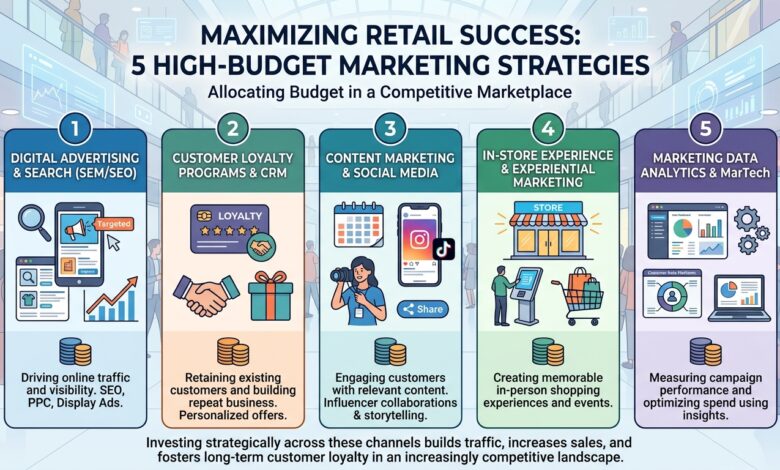
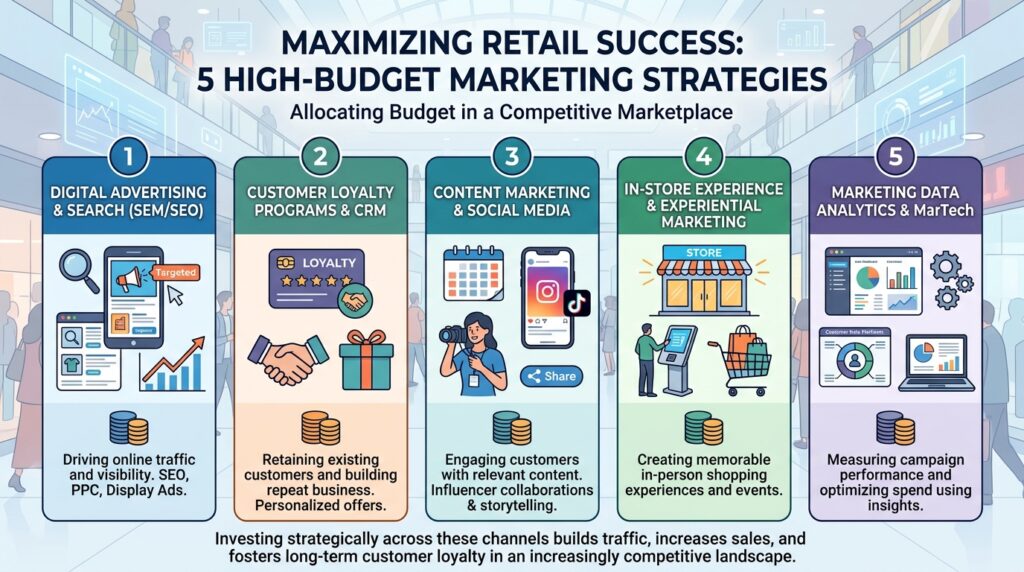
Retailers operate in an increasingly competitive marketplace where attracting and retaining customers requires significant investment. Many businesses allocate a substantial portion of their annual marketing budget to strategies that drive traffic, increase sales, and build long-term customer loyalty. While the exact spending varies by industry and company size, five marketing strategies consistently receive the largest share of retail marketing budgets.
Why Retailers Invest Heavily in Marketing
Retail businesses rely on marketing to reach potential customers, strengthen brand awareness, and stay ahead of competitors. Effective marketing helps retailers:
- Increase online and in-store traffic
- Boost sales and revenue
- Build customer loyalty
- Launch new products successfully
- Improve brand recognition
- Gain valuable customer insights
Because consumer behavior constantly evolves, retailers continuously invest in both digital and traditional marketing channels.
1. Digital Advertising
Digital advertising is one of the largest marketing expenses for retailers. Businesses use paid online campaigns to reach highly targeted audiences across search engines, social media, websites, and mobile apps.
Common digital advertising channels include:
- Google Search Ads
- Google Display Network
- Facebook Ads
- Instagram Ads
- TikTok Ads
- YouTube Advertising
- LinkedIn Ads (for B2B retailers)
Benefits
- Immediate visibility
- Highly targeted audiences
- Measurable results
- Flexible budgets
- Increased website traffic
Digital advertising often accounts for a major portion of annual marketing spending because it delivers measurable returns and scalable growth.
2. Social Media Marketing
Retailers invest heavily in social media to engage customers, build communities, and promote products.
Popular platforms include:
- TikTok
- X (formerly Twitter)
Social media budgets cover:
- Content creation
- Paid promotions
- Community management
- Video production
- Live shopping events
- Influencer partnerships
Benefits
- Strong brand awareness
- Customer engagement
- Product discovery
- Increased website visits
- Direct customer communication
Social media has become essential for reaching modern consumers.
3. Search Engine Optimization (SEO) and Content Marketing
SEO and content marketing generate long-term organic traffic by helping retailers appear in search engine results.
Retailers invest in:
- Product guides
- Blog articles
- Buying guides
- Product comparisons
- Video tutorials
- Category page optimization
- Technical SEO
Benefits
- Sustainable traffic
- Lower long-term acquisition costs
- Higher search rankings
- Increased credibility
- Better user experience
Although SEO requires ongoing investment, it often provides one of the highest long-term returns on marketing spend.
4. Customer Loyalty and Email Marketing
Keeping existing customers is generally more cost-effective than acquiring new ones. As a result, retailers dedicate significant resources to customer retention.
Common loyalty strategies include:
- Reward programs
- Personalized email campaigns
- Exclusive discounts
- Birthday offers
- Mobile app rewards
- VIP memberships
Email marketing campaigns often include:
- Product recommendations
- Promotional offers
- Abandoned cart reminders
- Seasonal sales
- Product launches
- Customer newsletters
Benefits
- High return on investment
- Increased repeat purchases
- Strong customer relationships
- Personalized shopping experiences
Email marketing remains one of the most profitable digital marketing channels.
5. Influencer and Partnership Marketing
Consumers increasingly trust recommendations from creators and industry experts. Retailers therefore invest heavily in influencer collaborations.
These partnerships may involve:
- Product reviews
- Sponsored videos
- Social media posts
- Affiliate marketing
- Brand ambassadors
- Live shopping events
Benefits
- Greater brand exposure
- Increased consumer trust
- Higher engagement
- Improved product awareness
- Access to niche audiences
Micro-influencers are particularly valuable because they often have highly engaged followers.
Additional Marketing Investments
Besides these five major strategies, retailers also spend on:
- Television advertising
- Radio campaigns
- Outdoor billboards
- Print advertising
- Public relations
- Event sponsorships
- Mobile app marketing
- SMS campaigns
- Video marketing
- Customer research
The mix depends on the retailer’s target audience, products, and business goals.
How Retailers Allocate Their Marketing Budgets
Although every company is different, a typical marketing budget may be distributed across several key areas:
| Marketing Strategy | Primary Goal |
|---|---|
| Digital Advertising | Customer acquisition |
| Social Media Marketing | Brand awareness and engagement |
| SEO & Content Marketing | Organic traffic growth |
| Email & Loyalty Programs | Customer retention |
| Influencer Marketing | Product promotion and trust building |
Many retailers combine these strategies to create a balanced marketing plan that supports both short-term sales and long-term growth.
Factors That Influence Marketing Spending
Retail marketing budgets are affected by several factors, including:
- Business size
- Industry competition
- Seasonal demand
- Product categories
- Target audience
- Economic conditions
- Marketing objectives
- Sales performance
Retailers regularly analyze campaign results and adjust spending based on return on investment (ROI).
Future Retail Marketing Trends
Retail marketing continues to evolve with new technologies and changing consumer expectations. Emerging trends include:
- Artificial intelligence (AI) for personalized recommendations
- Voice search optimization
- Augmented reality (AR) shopping experiences
- Live commerce and livestream shopping
- First-party customer data strategies
- Predictive analytics
- Omnichannel marketing
- Sustainable and purpose-driven branding
Businesses that embrace these innovations can create more engaging customer experiences while improving marketing efficiency.
Conclusion
When asked “What are five marketing strategies that retailers spend half of their annual budget on?”, the answer typically includes digital advertising, social media marketing, SEO and content marketing, customer loyalty and email marketing, and influencer marketing. These strategies help retailers attract new customers, strengthen relationships with existing shoppers, and increase long-term profitability. By investing wisely across these channels, retailers can maximize their marketing return and remain competitive in today’s rapidly changing retail landscape.